
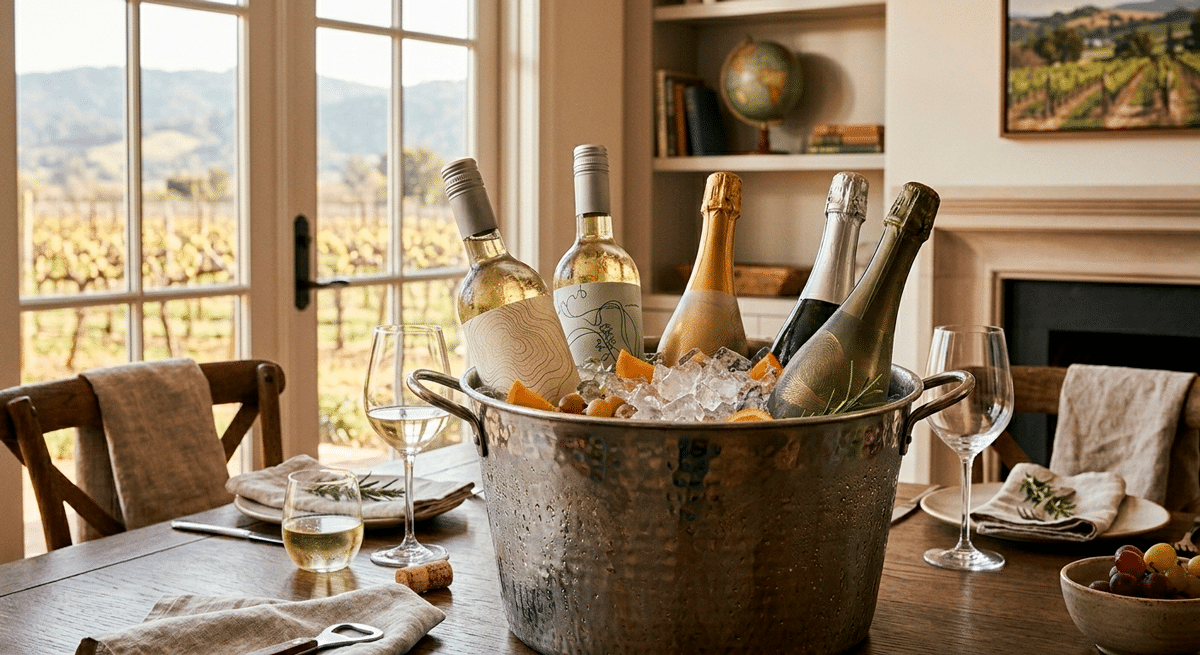
In the wine sector, the consumer experience does not end with the purchase, but culminates at the table. For whites, rosés and sparkling wines, that experience inevitably involves the ice bucket. However, a spectacular design can be ruined in minutes if the label is not technically prepared for extreme humidity.
The technical challenge of label design
When it comes to wine labels, aesthetics must go hand in hand with functionality. Rapid cooling and prolonged immersion in water and ice subject the paper and adhesive to constant stress. If the material is not suitable, three major problems arise: peeling, wrinkling (bubbles) and colour loss due to friction.
Key factors for total resistance
To ensure that your brand image remains intact, at Argraf we recommend paying attention to three key areas:
- Moisture-resistant paper: The use of Wet Strength coated face stock is essential. These papers maintain their opacity even when saturated with water, preventing the label from turning grey or transparent.
- High cohesion adhesives: Not all adhesives can withstand thermal shock. It is necessary to use acrylic adhesives designed to maintain their grip in conditions of condensation and low temperatures.
- Finish protection: Varnishes and laminates not only add elegance, but also act as a water-repellent barrier that protects inks and embossing.
In label design, the choice of substrate is as critical as graphic creativity. A label that withstands the ice bucket is synonymous with a brand that pays attention to detail right down to the last sip.
Do you require technical advice for your next project? At Argraf, we specialise in solutions that defy humidity. Please contact us.